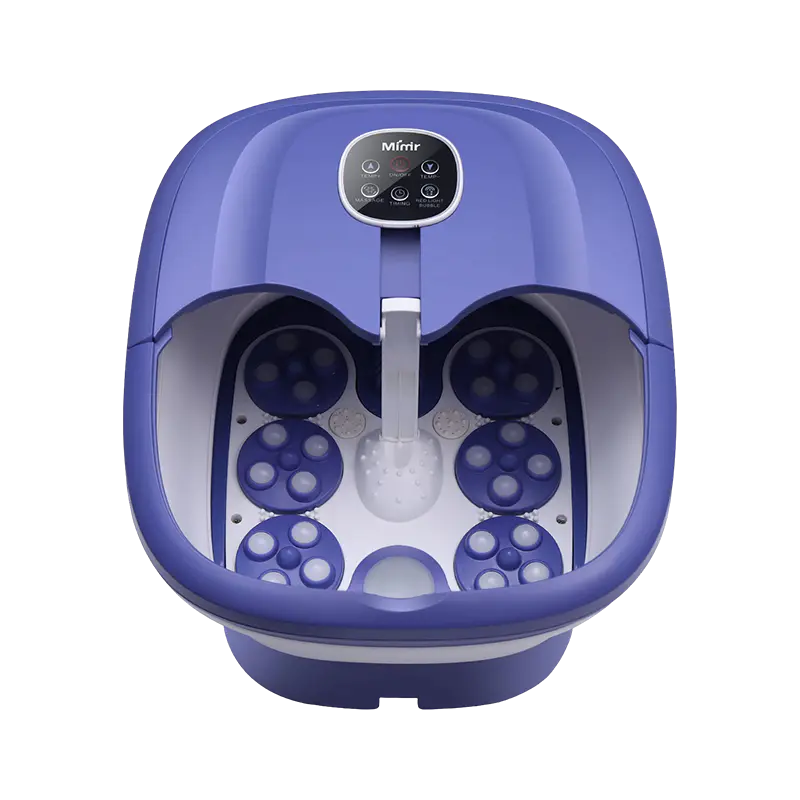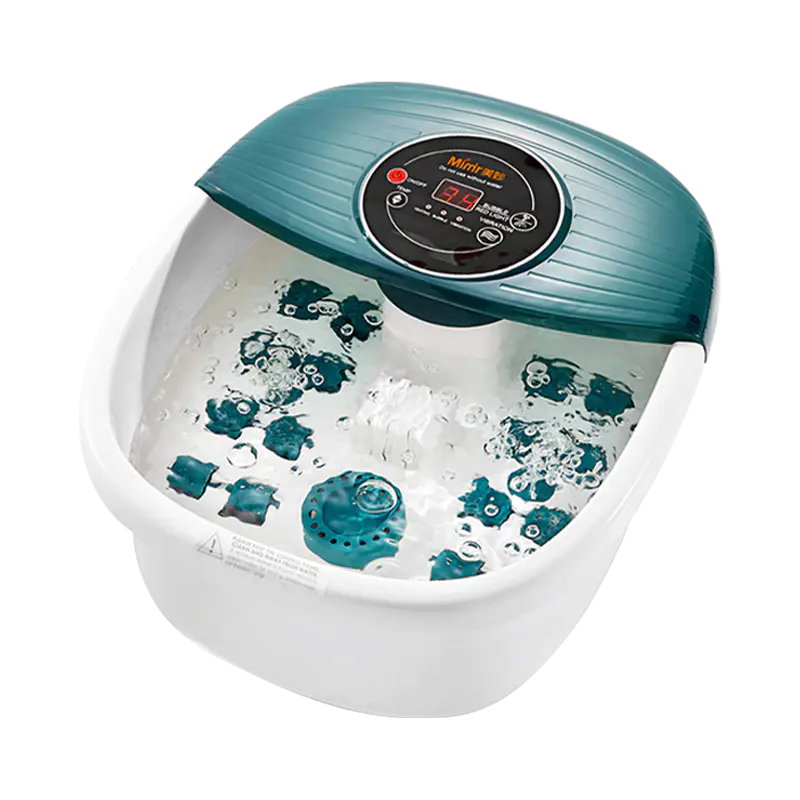


 English
 日本語
日本語 Español
 한국어
한국어If you own a foot spa, you already know the ritual: fill, soak, relax, and then the part nobody talks about. The water goes cold, the basin needs emptying, and there is a faint smell you cannot quite place. We have been building foot spa massagers since 2005, and the questions customers send us are rarely about rollers or heating elements. They are about cleaning.
The reassuring news is that cleaning a foot spa is not complicated. It takes about five minutes after each soak, plus one longer session a month. Do that consistently and the machine stays fresh, the rollers keep turning smoothly, and you avoid the two things that end a foot spa's life early: mineral scale and trapped moisture.
Here is the routine we recommend, based on what we have seen inside units that were looked after and units that were not.
Why a Foot Spa Needs More Than a Quick Rinse
The water in a foot spa is never just water. By the end of a twenty-minute soak it holds skin cells, natural oils, soap residue, and whatever you added, whether that is bath salts, a soak powder or a few drops of oil. That mixture is warm, and warm organic residue is exactly what bacteria and fungi look for. Leave it sitting overnight and a thin film forms on the walls within hours. Leave it for a few days and that film turns into a slippery layer that a quick rinse will not shift.
Hard water is the second issue. Every fill brings dissolved minerals with it, and when the water evaporates those minerals stay behind as scale. Scale builds fastest exactly where it causes the most trouble: on the heating plate, around the massage rollers, and inside the narrow channels that carry air or water. A scaled heater takes longer to warm the basin. A scaled roller assembly starts to squeak, then to stick.
Then there is the air hose. Bubble models pull air from the room and push it into the water through a channel that is often long and impossible to see inside. Vapour and skin residue collect there, and because the hose stays damp long after the basin looks dry, it is the most common source of that musty smell people complain about.
None of this is a design flaw. It is simply what happens when warm water, skin and minerals share a small space. Regular cleaning solves all three problems at once and keeps the machine working the way it did on the first day.
What You Will Need
- A soft sponge or a soft-bristled brush; an old toothbrush is ideal for corners and crevices
- A mild, non-abrasive dish soap, or the cleaner your manufacturer recommends
- White vinegar or citric acid for descaling
- A small bottle brush or pipe cleaner for hoses and jet openings
- Two clean microfiber cloths, one for washing and one for drying
- A disinfectant approved for the basin material, checked against your manual first
- Plenty of fresh water for rinsing
Two things to keep away from a foot spa: abrasive scouring pads, which scratch plastic and give residue somewhere to hide, and any cleaner containing bleach unless your manual explicitly permits it. And never submerge the electrical base or the control panel. Wipe them, do not dunk them.
The Five-Minute Routine After Every Soak
- Unplug the unit before you touch the water. Every time, without exception.
- Drain straight away. Do not leave the water to cool and sit while you do something else.
- Wipe the interior with warm water and a drop of mild soap, working from the rim to the base. Pay attention to the waterline, where a film forms first.
- Rinse with fresh water, then dry the surfaces with a cloth. Water left in seams and folds is what creates odour.
- Leave the basin open or unfolded to air dry completely, and store the drain hose empty rather than coiled with water inside.
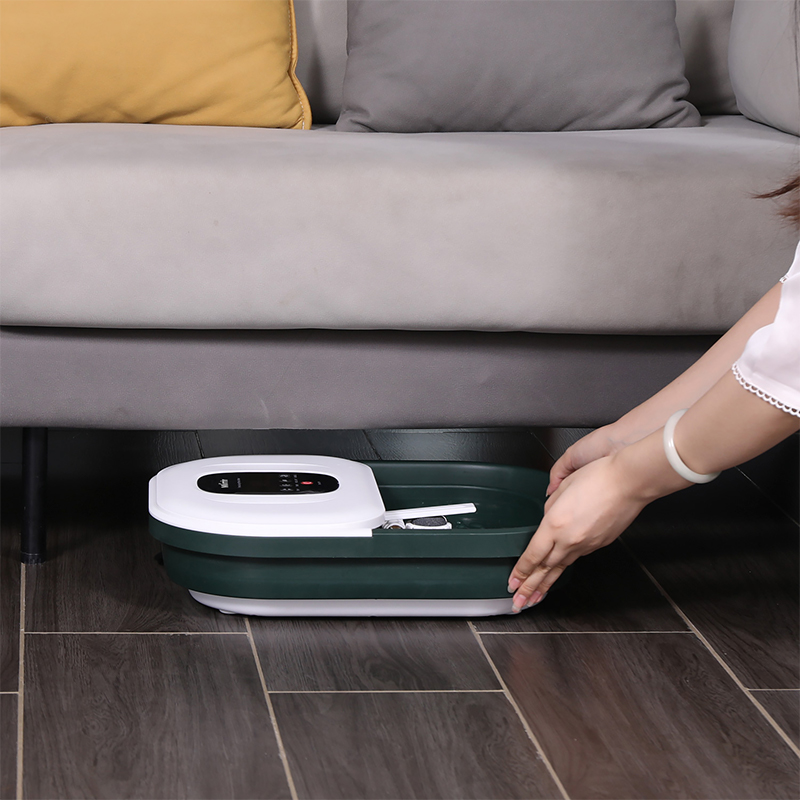
One design note from our own experience: collapsible foot spas are genuinely easier to keep clean. Because the basin folds down, you can rinse the bottom corners properly and let the whole thing dry flat instead of trapping moisture in a rigid tub.
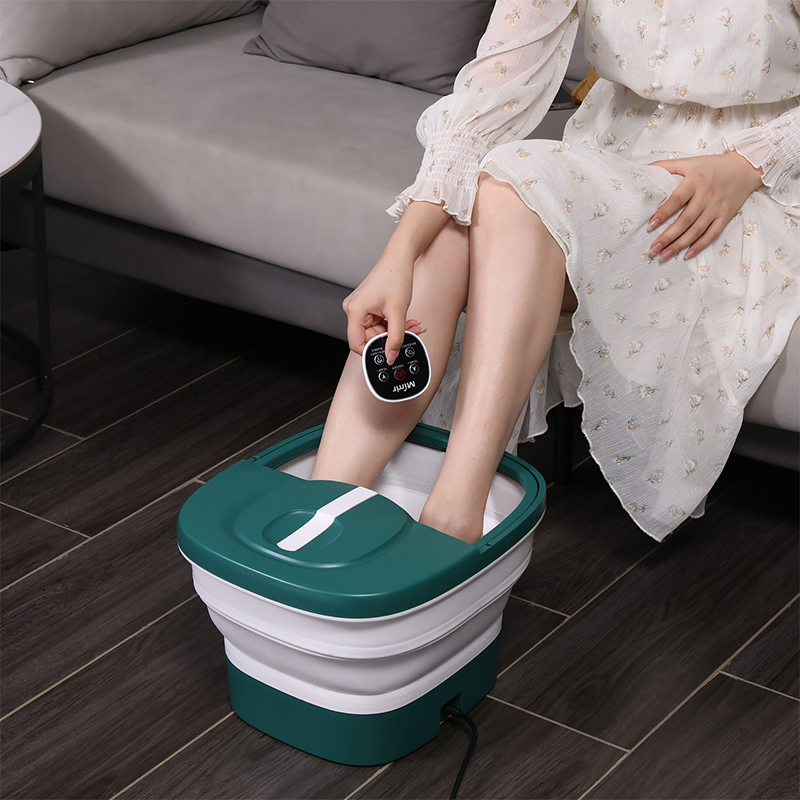 MZD-03D Collapsible Foot Spa with Automatic Massage RollersFoldable foot spa with six automatic massage rollers, adjustable 35–48°C water, timer and remote; its collapsible basin is easier to rinse and dry flat.View Product →
The Monthly Deep Clean
Once a month, or every two to three weeks if you soak daily, the five-minute routine is not enough. Scale and biofilm need something that actually dissolves them.
Removing Scale with Vinegar
- Fill the basin with warm water to the maximum line.
- Add white vinegar at roughly one part vinegar to three parts water, or use citric acid at the dose on the packet.
- Run the massage and bubble functions for ten to fifteen minutes with the solution in the basin, so it travels through the internal channels instead of just sitting there.
- Drain, then scrub every surface with a soft brush, concentrating on the waterline, the roller housing and the drain cover.
- Rinse twice with clean water and run the massage function briefly again to flush the internal parts.
- Dry thoroughly and leave the unit open to air dry.
Vinegar is acidic, so keep these contact times short and never leave it standing in the unit overnight. If your manual recommends a specific descaler, use that instead. It was tested on the materials you actually own.
The Air Hose and Jets
If your foot spa bubbles, the air hose deserves separate attention. Detach it where the design allows, run warm soapy water through it, flush with clean water, then hang it up to drain. For fixed jet openings, a bottle brush or pipe cleaner clears the opening without scratching it. Never push a sharp object into a jet to unblock it, and never run the unit without water in the basin.
The same principle applies to bath jet spa units for the tub: one blower, a hose and one or two outlets, all of which need flushing and drying rather than a casual wipe. Our notes on how a dual jet bath spa works and how to care for it cover the same ground in more detail.
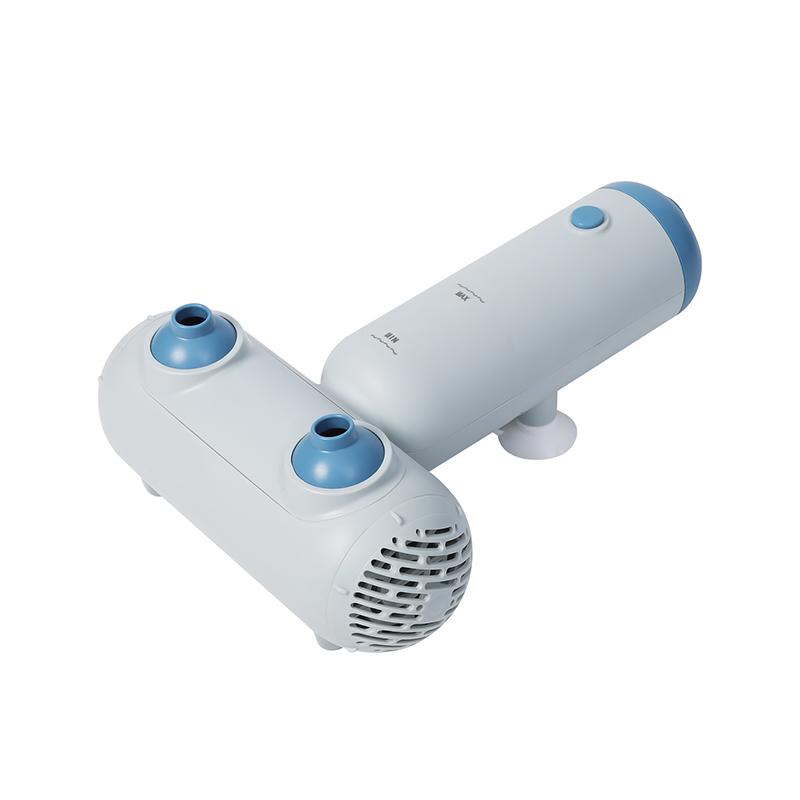 MS-03 Dual-Jet Bubble Spa for Home BathtubsCompact dual-jet bath spa with Bubble and Jet modes, targeted shoulder, back, and leg massage, DC12V IP67 protection, and suction-cup mounting for home bathtubs.View Product →
Pumice Stones, Rollers and Removable Parts
Removable parts should come out and be cleaned individually. Rollers collect skin and soap film in the gaps between them, so soak them in warm soapy water, scrub gently, rinse and dry. Pumice stones need more care because they are porous. Scrub them with a stiff brush under running water after every few uses and replace them once the surface flattens or starts to crumble, since a worn porous stone is very hard to keep genuinely clean.
If your unit includes a pumice attachment, this is the part most owners forget about, and a model with a removable stone makes the whole job much simpler.
 MZD-22B-1 Collapsible Foot Spa with Pumice StoneCollapsible foot spa with eight massage rollers, oxygen bubble, pumice stone, medicine box, red light, and adjustable 35–48°C soaking; collapses for compact storage.View Product →
Cleaning a Shared Foot Spa Between Clients
In a salon or clinic, the standard is higher because the foot spa is shared. The sequence most professional bodies recommend is straightforward: drain, clean all interior surfaces until no visible residue remains, disinfect with a product registered for the purpose and used for its full contact time, then rinse and dry before the next client.
A few practical points we have picked up from talking with salon owners over the years:
- Use a fresh liner for each client where local rules allow it, but treat liners as an addition to cleaning, never a replacement for it.
- Clean the air hose and jets between clients, not only at the end of the day.
- Keep two sets of removable parts so one can soak while the other is in use.
- Write it down. A simple log with the date, product and contact time takes seconds and answers most inspection questions.
- Never top up a basin that has already been used. Fresh water for every client.
How Often Should You Clean Each Part?
| Part or area | After every use | Weekly | Monthly |
|---|---|---|---|
| Basin interior and waterline | Rinse and dry | Wipe with mild soap | Vinegar solution deep clean |
| Drain, filter and hose | Empty and hang to dry | Rinse with warm water | Soak in warm soapy water |
| Massage rollers | Rinse | Remove, clean and dry | Soak, scrub and check for wear |
| Air hose and jet openings | Drain and air dry | Flush with warm water | Flush with soapy water and brush |
| Heating plate and scale | Not required | Check for film | Descale with vinegar or citric acid |
| Exterior and power cord | Wipe dry | Wipe with a damp cloth | Check cord and plug for damage |
Mistakes That Cut a Foot Spa's Life Short
- Leaving water in the basin overnight. This is the most common cause of odour and film.
- Using bleach or scouring pads on plastic. They dull the surface, and dull plastic holds residue.
- Submerging the base or control panel to "give it a proper wash".
- Folding or closing a damp unit for storage. Trapped moisture grows mould.
- Skipping the air hose, which stays damp longer than anything else in the machine.
- Adding oils and salts but not adjusting the cleaning routine to match.
- Ignoring the heating plate until the water takes noticeably longer to warm up.
Storing It So It Stays Fresh
Dry the unit completely before it goes anywhere, then store it open or loosely folded, never sealed tight. A damp bathroom cupboard is the worst place for a foot spa, so if you can, keep it somewhere with moving air. Do not stack heavy items on top of the basin, and coil the cord loosely rather than wrapping it tightly around the housing. Before the next soak, give the interior a quick look and a wipe. It takes ten seconds and saves a much longer job later.
Questions We Hear Most
Can I clean a foot spa with just soap and water?
For everyday use, yes. Soap and warm water remove the residue that causes odour. What they will not do is dissolve mineral scale, which is why a descaling session is still needed every few weeks.
Is vinegar safe for a foot spa?
Diluted white vinegar is widely used and generally fine for short contact cycles, provided you rinse thoroughly afterwards. Check your manual first, because some manufacturers specify a proprietary descaler for a reason.
Why does my foot spa still smell after cleaning?
Almost always the air hose, or a unit that was folded away while still damp. Check the drain filter too; it collects more than most people expect.
Should I clean a brand-new foot spa before the first use?
Yes. A quick wipe and rinse removes any manufacturing or shipping dust, and it gives you a chance to read the manual's cleaning section properly.
Final Thoughts
Cleaning a foot spa is one of those chores that feels bigger than it is. Five minutes after each soak, one deeper session a month, and a habit of drying the unit completely before it goes into storage will keep it pleasant to use for years. The smell, the squeaky rollers and the slow heating are usually not signs of a worn-out machine. They are signs of a machine that has been left damp.
If you are equipping a salon, or sourcing foot spas for your own brand and want to understand how a specific model is built for cleaning and maintenance, our team is always glad to talk through the details.