

 English
 日本語
日本語 Español
 한국어
한국어There is little that beats easing tired feet into a warm, bubbling foot spa at the end of a long day. As a company that has designed and manufactured foot spa massagers since 2005, we can share a secret from the factory floor: the units that serve customers for years are the ones that get cleaned properly, week after week. Warm water, dead skin, and body oils create a cozy environment for bacteria and fungi when a spa is merely rinsed and put away damp. The good news is that learning how to disinfect a foot spa at home takes no special equipment and only a few extra minutes. Here is the routine we recommend.
Why Disinfecting Your Foot Spa Really Matters
Every soak leaves something behind: skin cells, oils, soap residue, and whatever your feet carried in that day. Rinsing with plain water removes visible debris, but it does little about the invisible film that builds up along the basin walls, around the rollers, and inside the jet channels. Over time, that residue becomes a biofilm, a sticky layer where the fungi responsible for athlete's foot and nail infections, along with ordinary bacteria, multiply in the leftover moisture.
It helps to separate two jobs that often get confused. Cleaning, done with soap and water, removes dirt and grime. Disinfecting kills or deactivates the microorganisms that cleaning leaves behind. A well-maintained home foot spa needs both, and once they become a habit, the two together take less than ten minutes.
How Often Should You Disinfect a Foot Spa?
The short answer: a quick clean should follow every single use, while a full disinfection follows a regular schedule. This is the schedule we share with our own customers:
| Usage scenario | Rinse and wipe after use | Full disinfection |
|---|---|---|
| One person, 1-2 soaks per week | After every soak | Once a week |
| One person, 3 or more soaks per week | After every soak | Two to three times per week |
| Shared by several household members | After every soak | After every use |
| Anyone with a foot infection | After every soak | After every use |
If someone in the household is dealing with a fungal or bacterial foot infection, disinfect the unit after every use and, ideally, dedicate one spa to that person until the issue clears up.
What You Need Before You Start
Gather your supplies first so the whole job stays quick and tidy:
- Mild dish soap or gentle liquid detergent
- An EPA-registered household disinfectant, or 70% isopropyl alcohol as an alternative
- White vinegar for dissolving mineral deposits from hard water
- A soft brush or an old toothbrush for rollers and seams
- Two soft cloths, one for washing and one for drying
- Clean warm water for rinsing, plus rubber gloves
One rule before anything else: unplug the unit. Never clean a foot spa while it is connected to power, and keep water away from the plug, the cord, and any control panel openings.
Step-by-Step: How to Disinfect a Foot Spa at Home
Step 1: Empty and Rinse Right After Your Soak
Pour out the used water as soon as your session ends rather than letting it sit, because standing water is where residue starts bonding to the basin. Rinse the interior two or three times with clean warm water to flush out loose debris, then wipe away anything you can still see.
Step 2: Wash the Basin with Soapy Water
Fill the basin partway with warm water and a small amount of dish soap, then swish it around with a soft cloth or brush. Give extra attention to the corners, the waterline ring, and the area around the drain. Empty the soapy water and rinse until no suds remain.
Step 3: Apply Disinfectant and Give It Time to Work
Spray or wipe a disinfectant over every surface that touched water, skin, or oil. This is the step most people rush, and it is the one that matters most. Most household disinfectants need to stay visibly wet on a surface for several minutes, often around ten, to actually do their job, so read the label and let the product sit for the full contact time. If you prefer a natural approach, a fifty-fifty mix of white vinegar and water dissolves mineral buildup nicely, but vinegar is a descaler more than a true disinfectant, so finish with alcohol or a registered product when hygiene is the priority.
Step 4: Run the Disinfectant Through the Jets
Bubble channels and jet openings are the hidden half of the system, and they are the reason a wiped-out basin can still smell musty a week later. Fill the spa with clean warm water, add disinfectant in the amount its label directs, and run the bubble or vibration function for five to ten minutes. Empty the unit, then run plain clean water through the system for two to three minutes to flush out any remaining solution.
Step 5: Disinfect the Rollers and Attachments
Removable rollers should come out, get washed in soapy water, disinfected, rinsed, and dried separately, because debris collects around every ridge. If your model includes a pumice stone, remember that this material is porous by design: it needs its own regular disinfecting and should be replaced once it becomes difficult to keep clean. Fixed rollers and massage nodes need a brush worked around each one, with disinfectant pushed into the seams where the roller meets the housing.
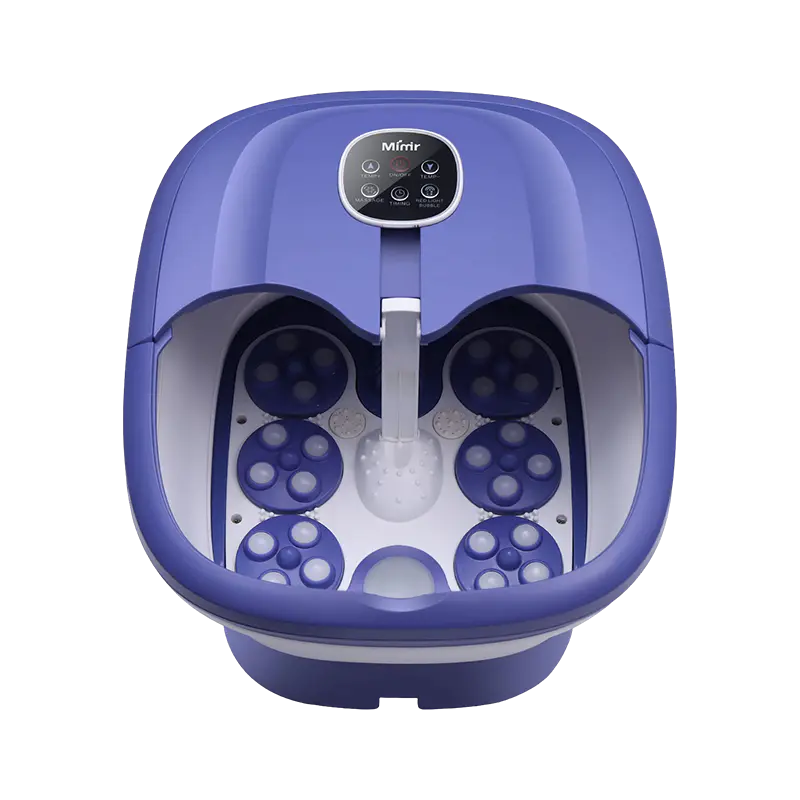
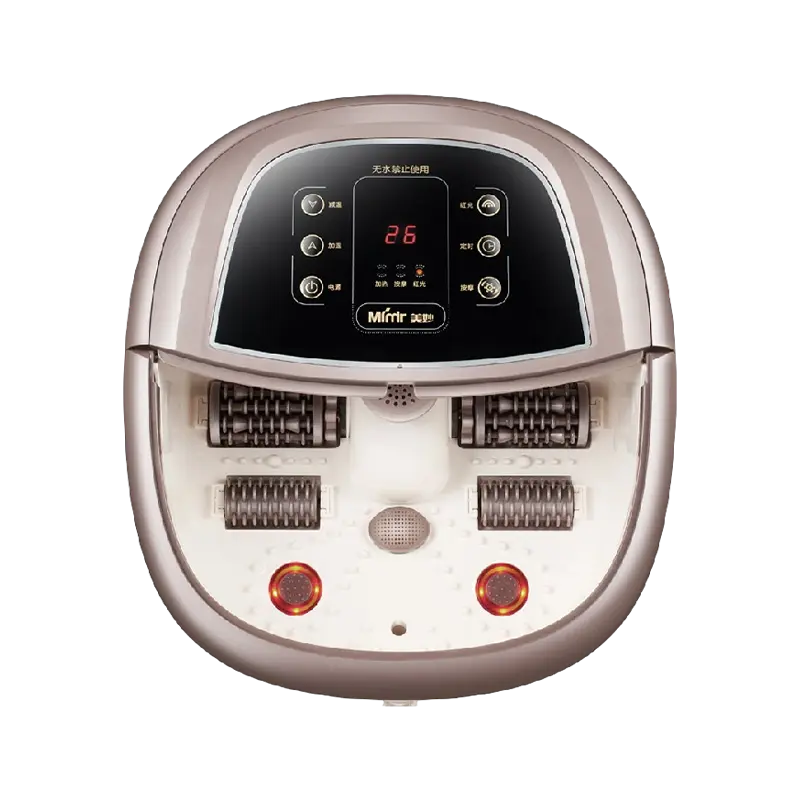
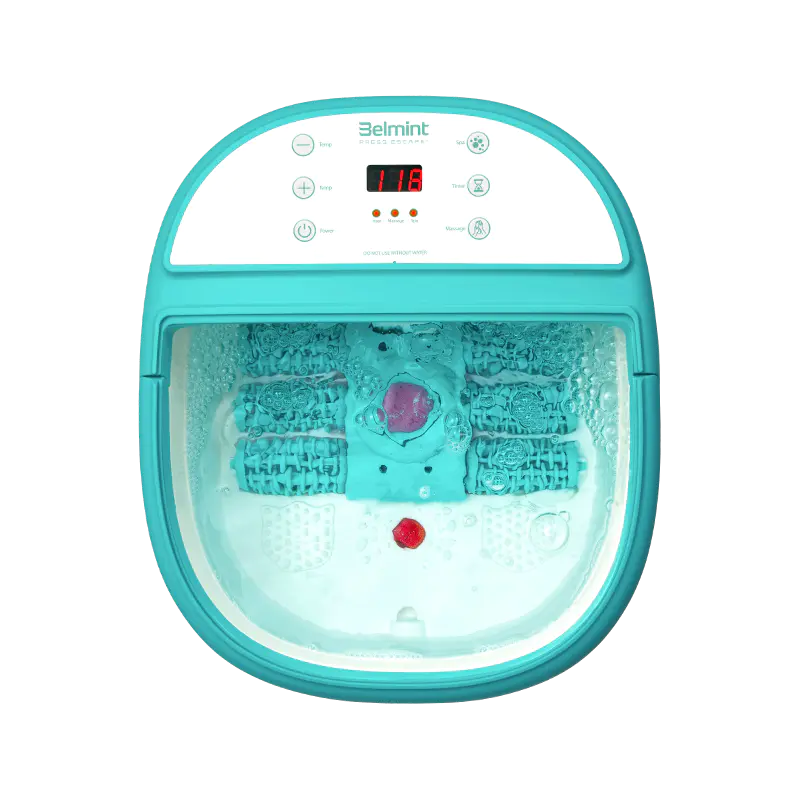
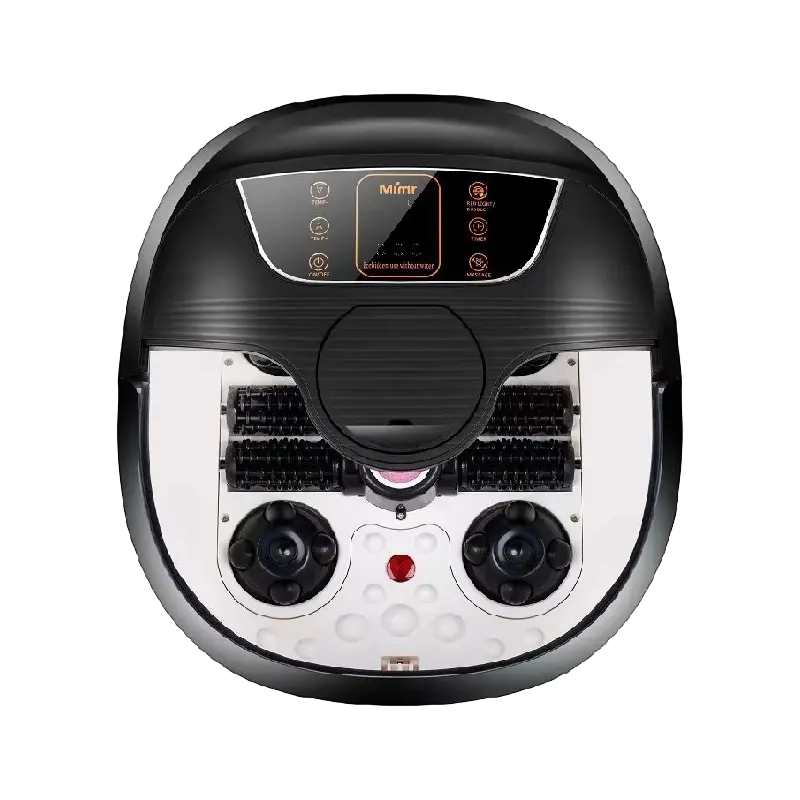
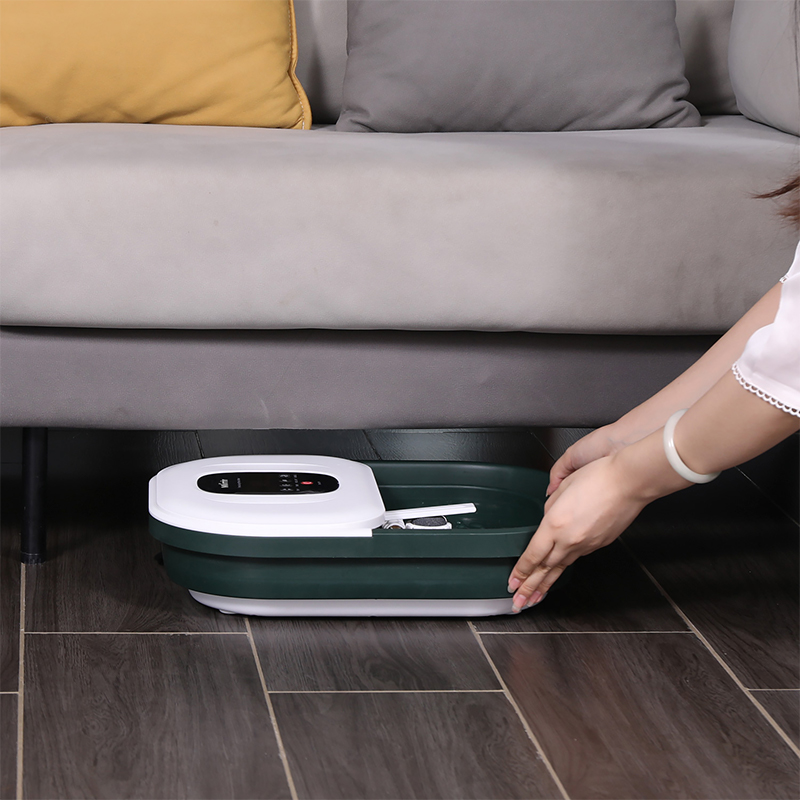 MZD-22B-1 Collapsible Foot Spa with Pumice StoneA foot spa machine with 8 massage rollers, adjustable water temperature, and a pumice stone. Its removable rollers suit the cleaning steps described here, and the fold-flat body dries and stores easily with the opening up.View Product →
Step 6: Rinse, Dry Completely, and Store
Give the whole unit a final rinse with clean water, dry it thoroughly with a soft cloth, and leave it to air-dry with the opening facing up until no moisture remains. Dampness is the enemy here: a spa stored even slightly wet can develop odor and microbial growth between uses. Once it is fully dry, store it covered, out of direct sunlight, with the cord loosely coiled.
Design Features That Make a Foot Spa Easier to Keep Clean
After two decades of building these products, we pay close attention to how easily a design can be cleaned, because a spa that is awkward to clean simply does not get cleaned as often as it should. Every foot spa bath massager in our range is developed with this reality in mind, and the same principles apply when you evaluate any unit you own or plan to buy.
Removable Rollers Change the Game
Rollers that pop out of their sockets let you disinfect every surface instead of working around them with a brush. Our MM18C, an automatic foot spa bath massager with 8pcs massage rollers, is built so the rollers lift out for washing, which cuts cleaning time roughly in half and leaves far fewer places for residue to hide.
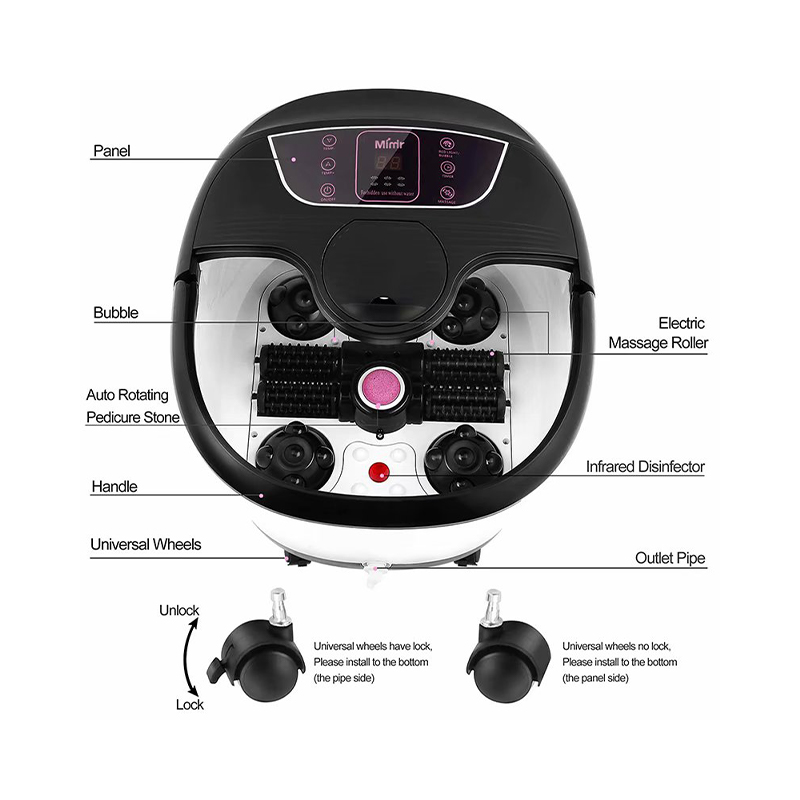 MM-18C Automatic Foot Spa Bath Massager with 8 RollersThis automatic foot spa massager offers adjustable water temperature, oxygen bubbles, red light, and a pumice stone. Its eight massage rollers lift out for washing, matching the removable-roller cleaning advantage discussed here.View Product →
Collapsible Basins Dry Faster and Store Flatter
A basin that folds down after use is not only easier to store in a small bathroom; it is also easier to empty, wipe, and dry completely, which shortens the damp window that microbes love. Our MZD03F collapsible machine for home use combines that fold-flat design with automatic massage rollers, so convenience does not come at the cost of the soak itself.
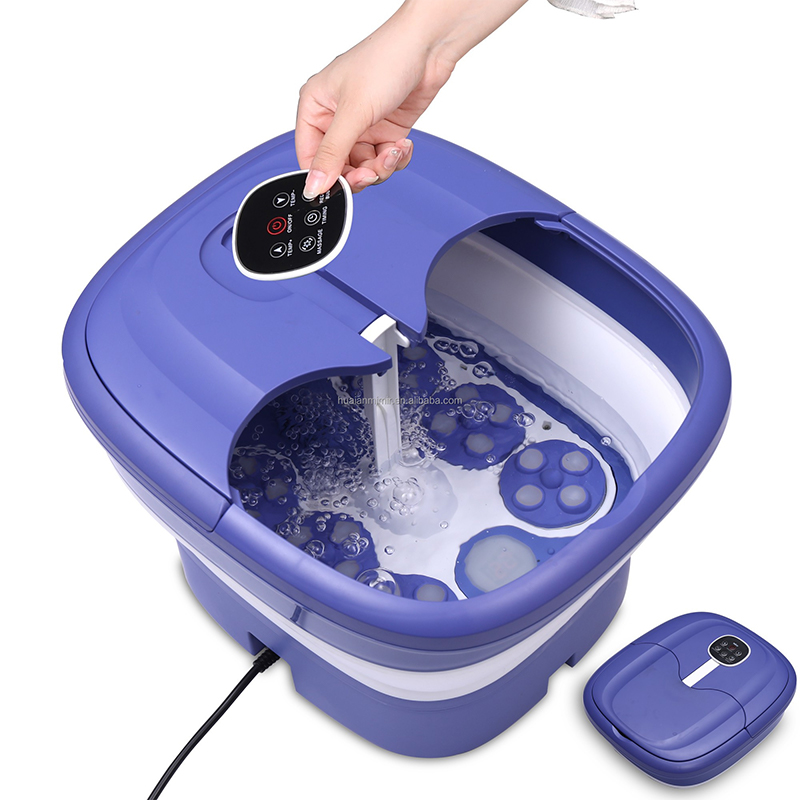 MZD-03F Collapsible Automatic Massage Foot Spa for Home UseA collapsible foot spa with six automatic rollers, rotary massage, adjustable temperature, timer, and wireless remote. Its fold-flat basin simplifies emptying, drying, and storage, fitting the hygiene guidance here.View Product →
Beyond those two features, look for smooth interior walls, wide drain openings, and clearly marked maximum water lines. Each of those details reduces the number of crevices where grime can settle during a soak.
Common Cleaning Mistakes to Avoid
We have watched these mistakes shorten the life of otherwise good units, so consider this the list to keep handy:
- Wiping the basin but never running disinfectant through the jets, which leaves the hidden channels dirty.
- Packing the spa away while it is still damp, which invites mildew and odors.
- Scrubbing with abrasive pads or harsh solvents that scratch the plastic and create tiny grooves where bacteria collect.
- Submerging the entire base, which lets water reach the motor and heating element.
- Ignoring the manual, since some units specify which disinfectants are safe for their plastics and seals.
- Forgetting the small parts, including rollers, acupressure panels, and any pumice attachment.
A foot spa is a small luxury that rewards a little discipline. Disinfect after every soak, run a deeper clean on a regular schedule, and dry the unit fully before it goes back on the shelf. Do that, and every session starts as fresh as the first one. Then comes the enjoyable part: deciding what goes in the water. Our guide to what to put in a foot bath covers salts, herbs, and safe additives for a better soak. Your feet will notice the difference, and so will the lifespan of your spa.