


 English
 日本語
日本語 Español
 한국어
한국어Product Category:
- All products
- Foot Spa Bath Massager
- Foot Spa Bath Massager with Heat
- Automatic Massage Foot Spa Bath Massager
- Collapsible Foot Spa Bath
- Mechanical Switch Collapsible Foot Spa Bath
- Collapsible Foot Spa Bath with Remote Control
- Computer Control Collapsible Foot Spa Bath
- Collapsible Automatic Massage Foot Spa Bath
- Bath Jet Spa
- Single-Jet Bath Jet Spa
- Dual-Jet Bath Jet Spa
- Rechargeable Bath Jet Spa
- Water Dispenser
- Tabletop Water Dispenser
- Instant Hot Water Dispenser
- Portable Water Dispenser
- Ice Maker
Product:
Our Products
Portable Water Dispenser Suppliers
information to be updated
since 2005
Huaian Mimir Electric Appliance Co., Ltd.
As China Portable Electric Water Dispenser Manufacturers and Portable Water Dispenser Suppliers, Huai'an Mimir Electric Appliance Co., Ltd. was established in 2005 and is located at No. 97 East Shenzhen Road, Huai'an Economic and Technological Development District, Jiangsu Province. It is a technology-based enterprise specializing in the production and sales of health home appliances such as foot bath massagers and small massagers. The company covers an area of over 50 acres and currently has 200 employees, with a total investment of over 100 million yuan.

Quality and Certifications
The company has fully passed ISO-9001 quality management system certification, ISO-14001 environmental management system certification, and Zhongwei An's antibacterial product certification, as well as export certifications for CE, CB, KC, PSE, ETL, FCC, FDA, UKCA and other products in countries and regions such as the European Union, the United States, South Korea, and Japan, and has received unanimous praise from customers for its excellent product quality.
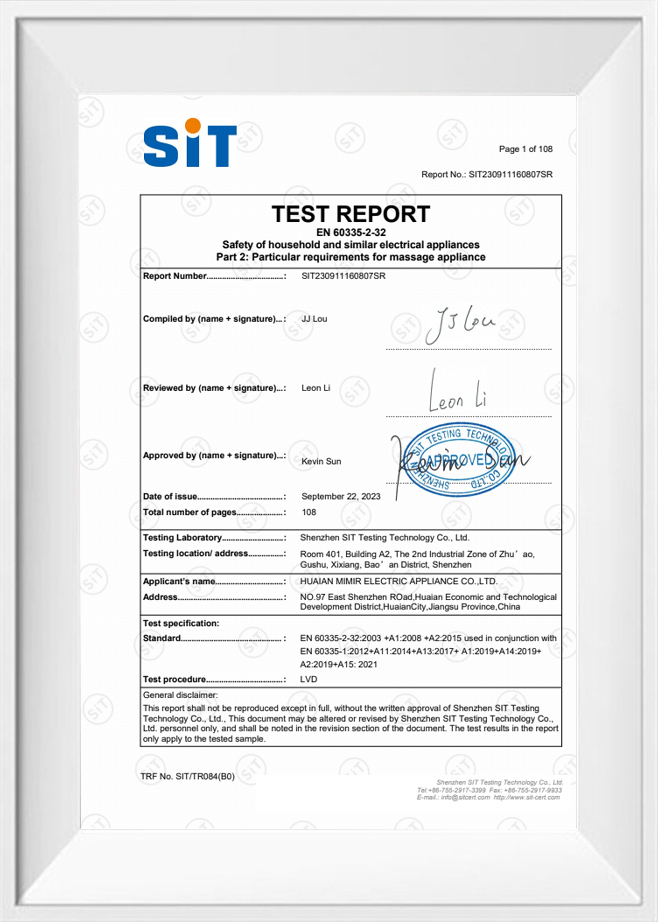
Test Report
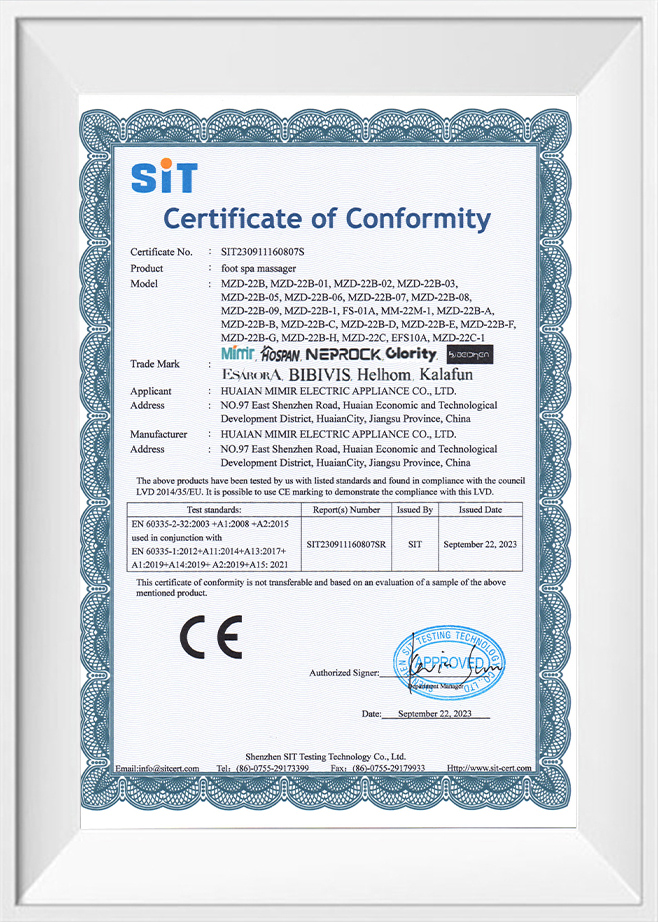
Certificate of Conformity
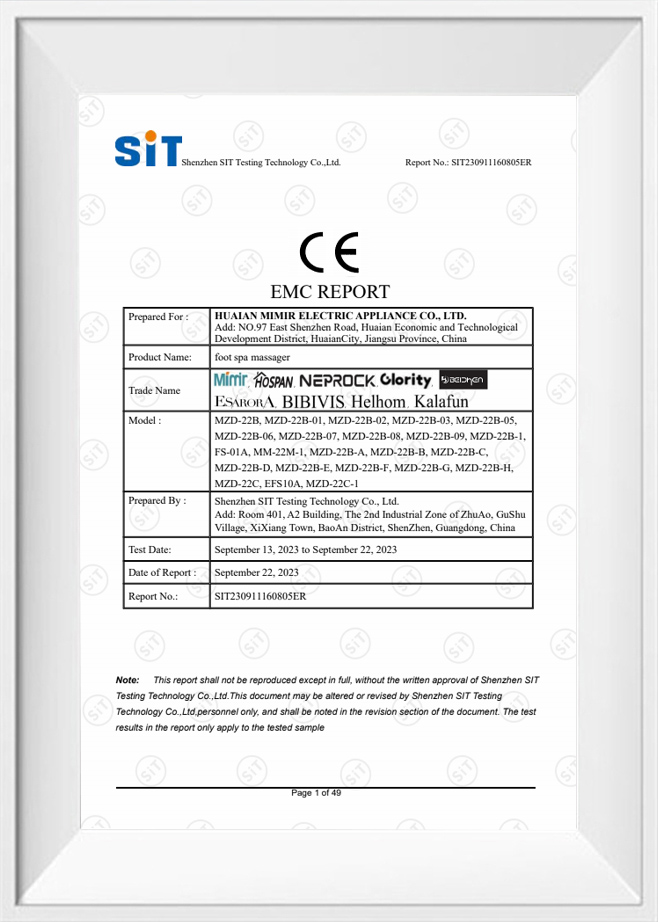
EMC Report
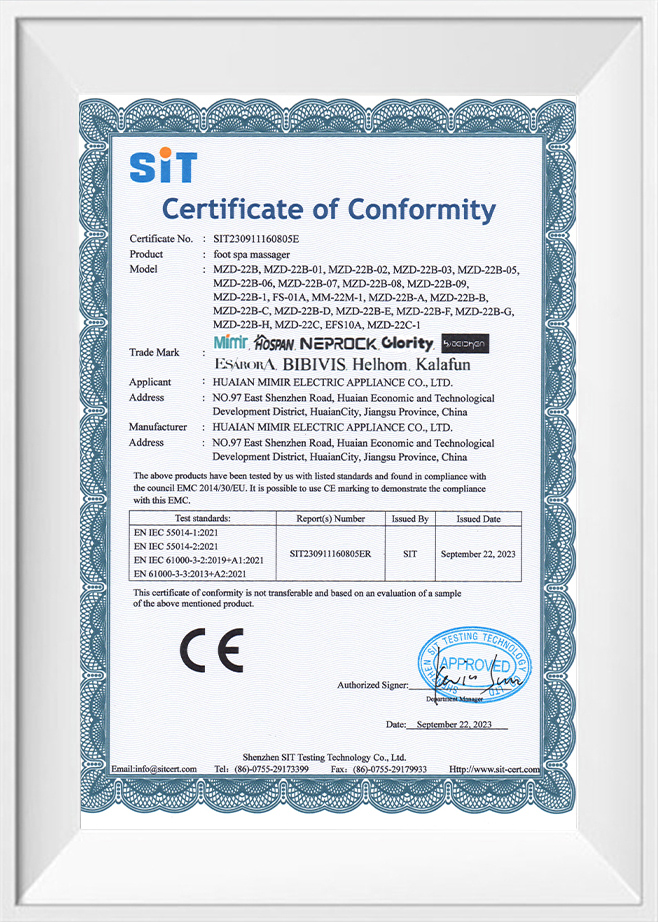
Certificate of Conformity
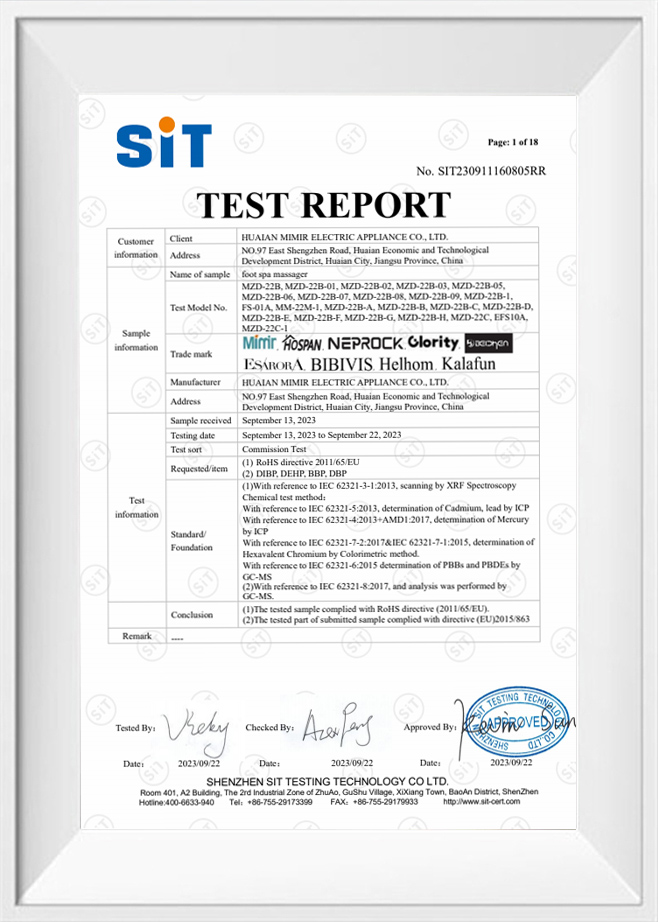
Test Report
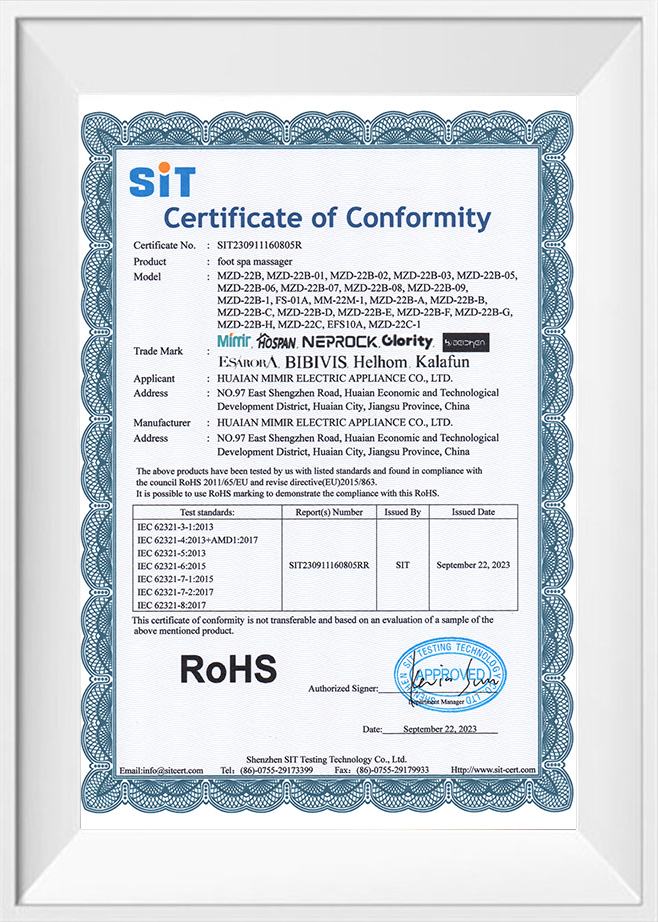
Certificate of Conformity
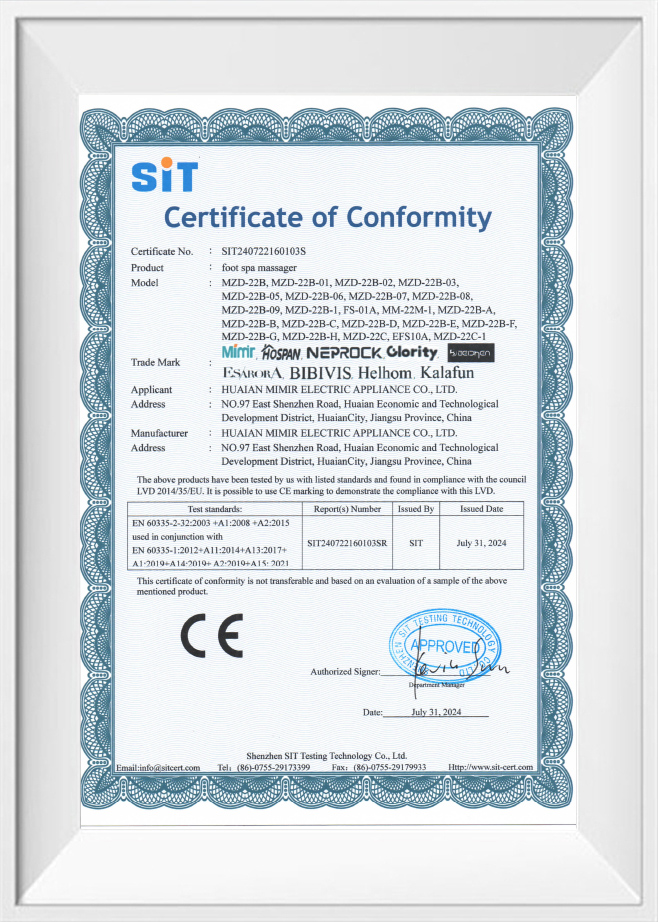
Certificate of Conformity
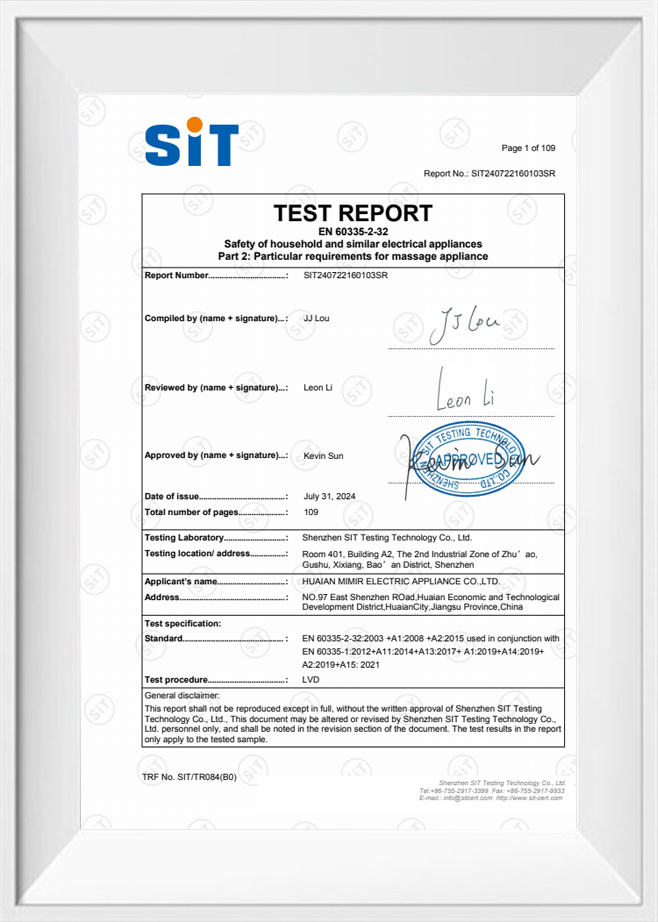
Test Report
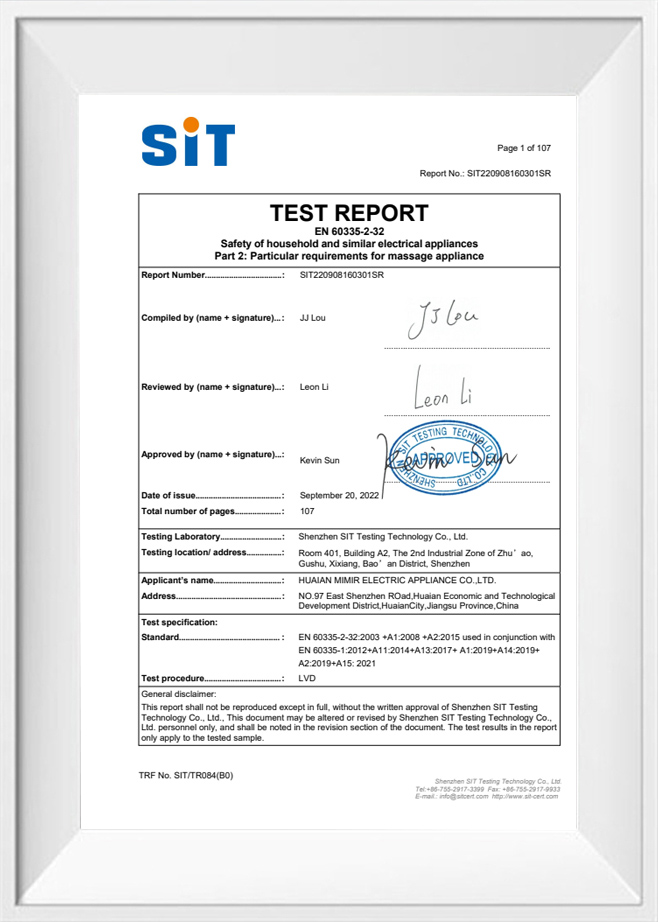
Test Report
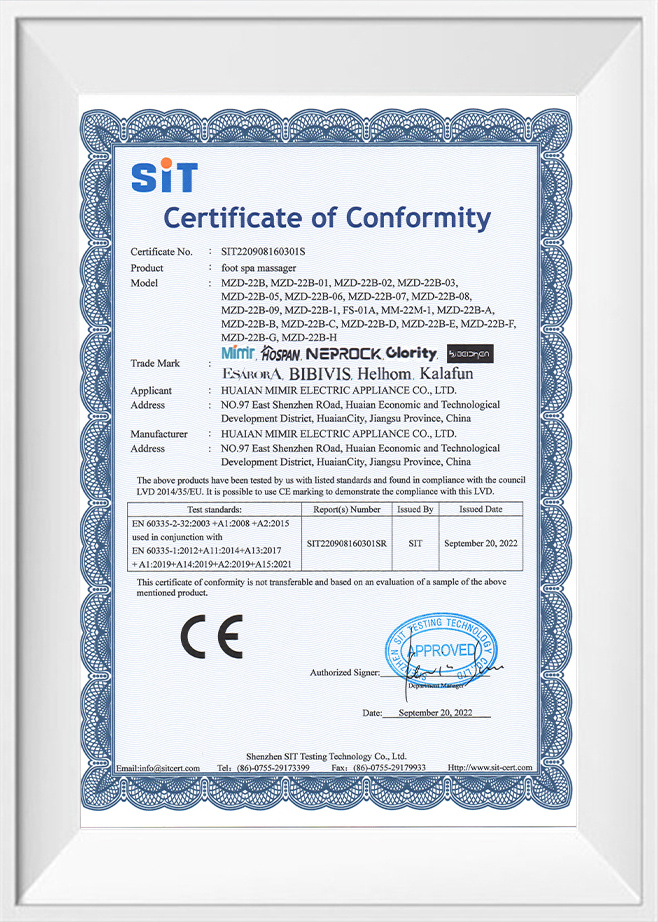
Certificate of Conformity
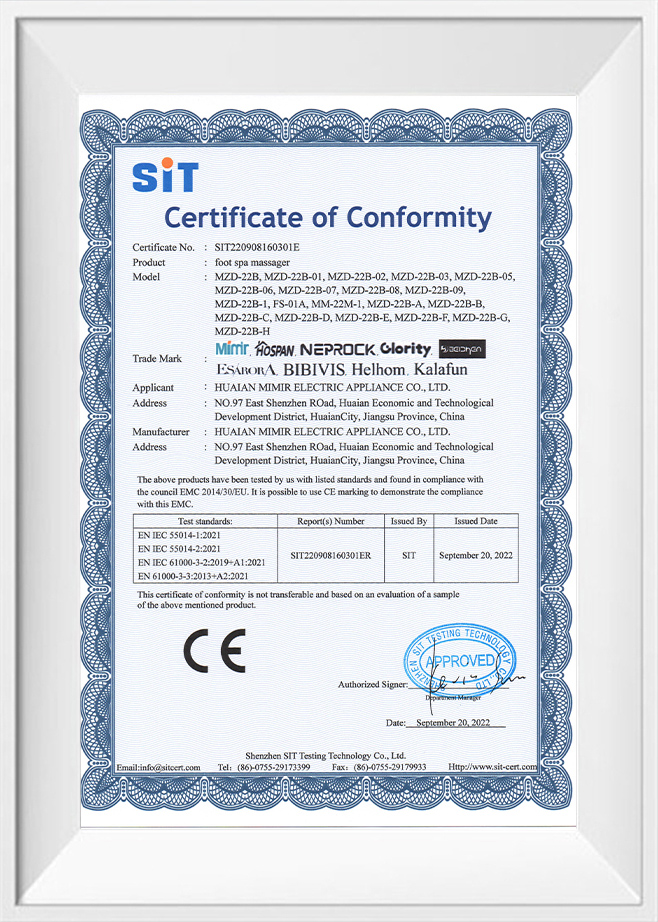
Certificate of Conformity
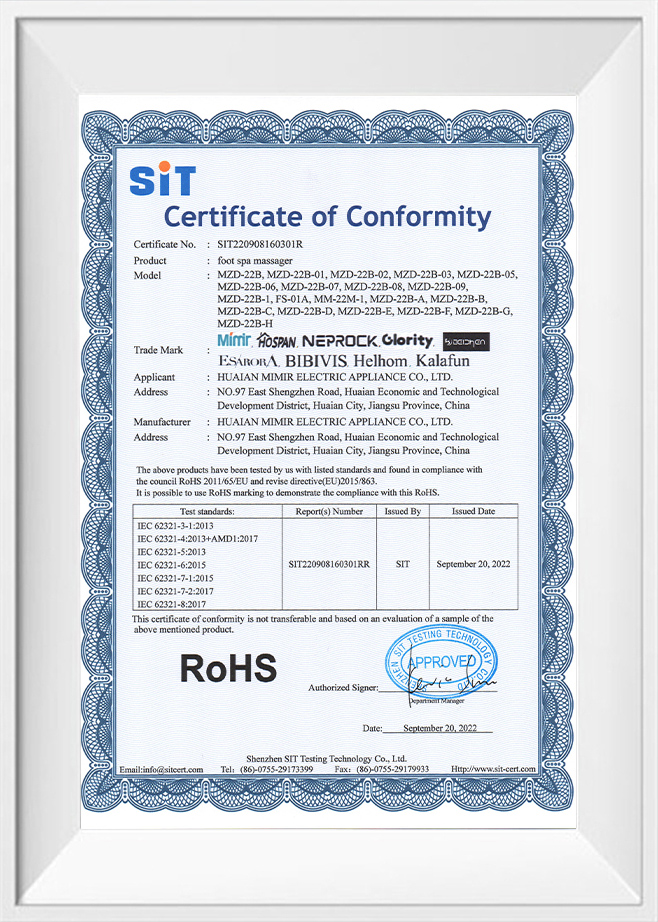
Certificate of Conformity
Portable Water Dispenser Industry Knowledge Extension
How Does the Structural Design of a Portable Water Dispenser Facilitate Universal Compatibility and Mobility?
The fundamental value proposition of a Portable Water Dispenser lies in its physical adaptability. Unlike fixed countertop models, the portable variant is engineered to function as a versatile bridge between various water sources and the consumer. This requires a deep focus on industrial design, material weight, and universal fitting mechanisms.
Universal Base Engineering and Neck Compatibility
A high-quality portable water dispenser for 5-gallon bottles must solve the problem of varying bottle neck diameters. Global standards for water jugs often fluctuate between 55mm and 60mm, and a product-centric design must account for these tolerances.
Adaptive Silicone Gasket Systems: To ensure a secure, leak-proof fit on both crown-top and screw-top bottles, engineers utilize food-grade silicone gaskets with high elasticity. These gaskets create a vacuum seal that prevents external contaminants from entering the bottle while ensuring the pump remains stable during high-flow operation. This "one-size-fits-all" approach is a core attribute of the best portable water dispenser for outdoor camping, where users may encounter different brands of bottled water.
Compact Footprint and Lightweight Casing: Mobility is dictated by weight. By utilizing high-density ABS polymers for the outer shell, manufacturers can maintain structural integrity while keeping the device's weight under 300 grams. This ensures that the device does not become a burden in a travel kit or a backpack, reinforcing its identity as a truly travel-friendly portable water dispenser.
Foldable Spout Mechanics and Hygiene Maintenance
One of the most innovative product-level developments in this category is the foldable spout. This mechanical feature directly addresses the hygiene concerns associated with exposed water outlets.
Retractable Nozzle Engineering: The spout is designed with a precision hinge mechanism that allows it to fold into the body of the device when not in use. This prevents dust, insects, or accidental contact from contaminating the exit point. In a portable water dispenser with a foldable spout, the internal water path is automatically disconnected or sealed when folded, providing an additional layer of leakage protection during transit.
Anti-Drip Flow Geometry: The interior of the spout is engineered with specific fluid dynamics to ensure a clean cutoff. By utilizing a tapered exit design, the device minimizes residual water droplets, preventing the growth of mold or mineral buildup at the tip. This attention to detail is essential for a safe portable water dispenser for family use.
Power Management and High-Capacity Battery Integration
The "portable" nature of the product is entirely dependent on its energy storage. A product-centric analysis reveals a focus on lithium-ion efficiency and USB-C standardization.
High-Density Lithium Battery Cells: Most premium units now incorporate 1200mAh to 2000mAh batteries. This allows a USB-C rechargeable portable water dispenser to process up to 6–8 large 5-gallon jugs on a single charge. The choice of lithium-cobalt or lithium-iron-phosphate chemistries ensures the battery can withstand hundreds of charge cycles without significant capacity degradation.
Energy-Efficient Pumping Circuits: The internal PCB is optimized to minimize standby power draw. By using low-resistance copper wiring and efficient motor drivers, the device maximizes the kinetic energy delivered to the pump, ensuring a steady flow rate (typically 1.5 to 2.0 liters per minute) even when the battery is at 20% capacity.
Manufacturing Edge: Huaian Mimir’s Strategic Advantage
In the realm of portable appliances, the quality of the internal motor and battery is paramount. Huaian Mimir Electric Appliance Co., Ltd. stands out as a premier portable water dispenser manufacturer. Established in 2005 and located at No. 97 East Shenzhen Road, Huai'an Economic and Technological Development District, Jiangsu Province, Mimir is a technology-based enterprise spanning over 50 acres.
With a total investment exceeding 100 million yuan and a workforce of 200 employees, Mimir brings its extensive expertise in health home appliances—specifically foot bath massagers and small massagers—to the portable hydration market. Their experience in manufacturing high-torque motors for massagers gives them a distinct advantage in producing durable portable water dispensers for office use. Mimir’s production lines are optimized for electronic precision, ensuring that the pumping mechanisms are not only powerful but also whisper-quiet, a direct result of their years of noise-reduction research in health appliances.
What Technical Specifications Define the Pumping Efficiency and Material Safety of Portable Water Dispensers?
Beyond the exterior shell, the performance of a Portable Water Dispenser is dictated by the materials used in the water path and the efficiency of the internal vacuum pump.
Food-Grade Material Science and Chemical Purity
The internal components of the dispenser are in constant contact with drinking water, making material selection the most critical "hidden" attribute of the product.
Premium Silicone Inlet Tubing: High-quality units utilize platinum-cured silicone for the suction hose. Unlike cheaper peroxide-cured alternatives, platinum-cured silicone is odorless, non-yellowing, and does not leach volatile organic compounds (VOCs) into the water. This is a non-negotiable requirement for an eco-friendly portable water dispenser.
304 Stainless Steel and BPA-Free Plastics: The internal chamber where water is pressurized is constructed from SUS304 stainless steel or high-grade BPA-free PP (polypropylene). These materials are chosen for their resistance to corrosion and their inability to harbor bacterial colonies. For a portable water dispenser for 5-gallon jugs, ensuring that the plastic does not impart a "synthetic" taste to the water is a primary engineering goal.
Advanced Vacuum Pump and Motor Engineering
The heart of the device is a miniature diaphragm pump driven by a high-torque DC motor. The efficiency of this assembly determines the flow rate and battery life.
Self-Priming Diaphragm Mechanisms: To ensure that water begins to flow immediately without manual priming, the pump uses a self-priming diaphragm. This component creates a strong enough vacuum to lift water from the bottom of a 5-gallon bottle through nearly 50cm of tubing. The precision of the diaphragm valves ensures that there is no backflow, keeping the system primed for the next use.
Noise Reduction via Silicone Dampening: Drawing from Huaian Mimir's background in massage equipment, their portable pumps often feature "suspended" motor mounts. By encasing the motor in a silicone "jacket," vibrational energy is absorbed rather than amplified by the plastic housing. This results in a silent portable water dispenser that can be used in quiet office environments or during nighttime without disturbance.
Intelligent Flow Control and Quantitative Dispensing
Modern product design has moved away from simple "On/Off" switches toward intelligent volumetric control.
Timed and Measured Pumping Modes: Many units now offer pre-set dispensing options, such as 600ml (for standard sports bottles) or continuous flow. This is managed by an onboard microcontroller that counts the motor's revolutions or tracks time to calculate the volume dispensed. This feature makes the smart portable water dispenser with quantitative dispensing an essential tool for those who track their daily water intake.
One-Touch Capacitive Interactivity: Replacing mechanical buttons with capacitive touch sensors increases the product's lifespan. Mechanical buttons are prone to failure from water ingress or repeated physical stress; capacitive sensors are sealed beneath the plastic casing, making them waterproof and more durable over thousands of cycles.
Safety Protocols and Battery Protection Circuits
A portable electronic device used near water requires redundant safety systems to protect the user and the internal components.
Overcharge and Over-Discharge Protection (BMS): The Battery Management System (BMS) ensures that the lithium cell never reaches a dangerous voltage. It also includes short-circuit protection, which is vital in a rechargeable portable water dispenser that might be exposed to humidity or minor spills.
Automatic Shut-off and Dry-Run Prevention: To prevent the motor from overheating if the water bottle is empty, some advanced models include current-sensing technology. If the motor's current draw drops significantly, the system automatically shuts down to protect the pump's seals and motor windings.
How Do Manufacturing Rigor and Supply Chain Standards Impact the Product Life Cycle of Portable Water Dispensers?
The longevity of a Portable Water Dispenser is a direct reflection of the manufacturer's quality control protocols and their access to high-grade components.
Precision Tooling and Injection Molding Quality
The aesthetic and functional success of the dispenser depends on the quality of its plastic components.
High-Precision Mold Engineering: A well-manufactured dispenser features seamless joints and a lack of "flash" (excess plastic). This is achieved through high-precision injection molding machines. Huai'an Mimir Electric Appliance Co., Ltd. utilizes its 100-million-yuan investment to maintain state-of-the-art tooling. This ensures that the two halves of the dispenser's body fit together with a tolerance of less than 0.1mm, preventing water ingress into the electronic compartment.
UV-Stable Finishing: The plastics are treated with UV-resistant additives during the molding process. This ensures that the device does not become brittle or discolored when used as a portable water dispenser for outdoor travel, where it may be exposed to direct sunlight for extended periods.
Integrated Quality Control (IQC) and Testing Phases
For a technology-based enterprise like Mimir, quality is managed through data. Each unit undergoes multiple testing phases before packaging.
Acoustic and Flow Rate Testing: Every pump is tested in a soundproof chamber to ensure it meets decibel limits. Simultaneously, its flow rate is measured against a benchmark to verify the motor's performance. This rigorous testing ensures that the electric portable water dispenser delivered to the consumer is optimized for efficiency.
Pressure Leak Testing: The internal water path is subjected to a pressure test that exceeds normal operating conditions. This identifies any microscopic leaks in the silicone-to-stainless-steel connections, guaranteeing that the product remains dry and safe throughout its life cycle.
Expertise in "Health Home Appliances" and R&D Synergy
Mimir's 20-year history as a manufacturer of health appliances provides a significant R&D advantage.
Ergonomic Design Heritage: The user interface of their portable dispensers reflects the ergonomic research conducted for their massager lines. This includes the placement of the charging port for easy access and the angle of the spout to minimize splashing.
Stable Supply Chain and Component Sourcing: Being located in the Huai'an Economic and Technological Development District allows Mimir to source high-quality electronic components and raw materials from a verified network of suppliers. Their 200-employee workforce is trained in lean manufacturing, ensuring that even at high production volumes, the defect rate remains exceptionally low. This makes Mimir a trusted portable water dispenser manufacturer for global brands seeking reliable OEM/ODM partners.
Sustainable Design and End-of-Life Recyclability
As product-centric design moves toward sustainability, the construction of portable dispensers has adapted to be more environmentally friendly.
Modular Assembly for Repairability: By avoiding permanent glues and using standardized screws, high-quality dispensers are designed to be disassembled. This allows for the replacement of the lithium battery or the silicone hose, extending the product's life and reducing electronic waste.
Use of Recyclable Thermoplastics: The primary casing materials (ABS and PP) are fully recyclable. Leading manufacturers ensure that their production scraps are reground and reused in non-critical components, minimizing the environmental footprint of the manufacturing process. This commitment to the planet is a hallmark of a modern portable water dispenser.

No. 97, East Shenzhen Road, Economic Development Zone, Huai'an City, Jiangsu Province, China
+86-13566338989
Copyright © Huaian Mimir Electric Appliance Co., Ltd. Rights Reserved.
